
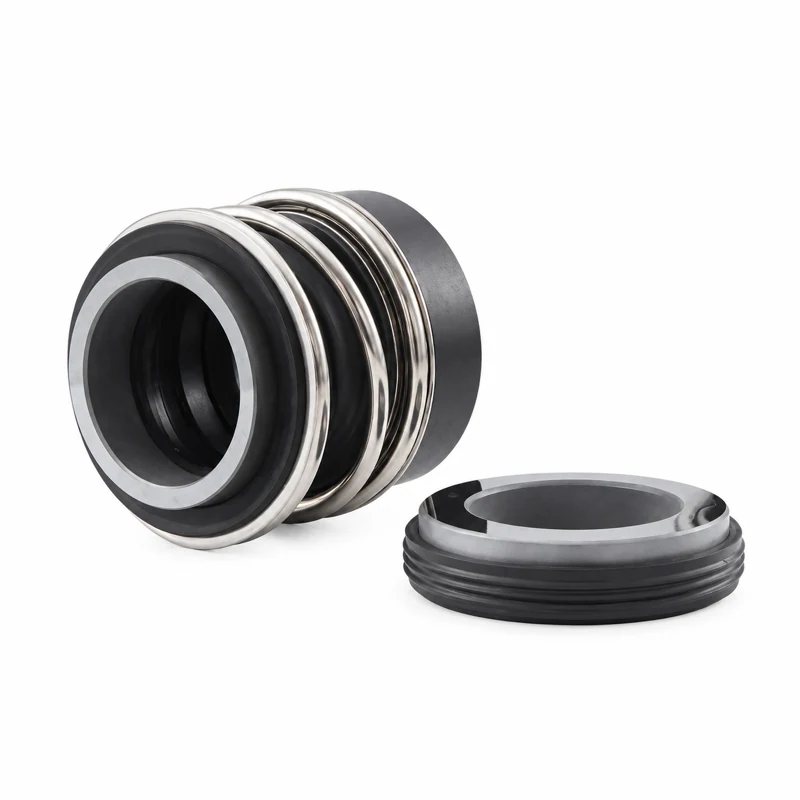
Pump mechanical seal for shaft sealing
A pump mechanical seal helps control leakage where the rotating shaft passes through the pump casing. A typical assembly uses a rotating seal face, a stationary seat and secondary sealing elements. The dimensions and materials vary between designs, so an accurate replacement requires more than the shaft diameter.
Measurements to identify a replacement
- Shaft diameter: measure the shaft where the seal fits, rather than relying only on the pump name.
- Stationary seat: measure its outside diameter and the recess in the seal housing.
- Assembly length: compare the installed length and working space with a drawing of the replacement.
- Original part: provide the pump model, existing seal number and photographs of the rotating and stationary components.
Choose materials for the operating conditions
Seal faces may use carbon, ceramic, silicon carbide or other materials; elastomers and metal parts also vary. A suitable combination depends on the liquid, concentration, temperature, pressure and shaft speed. Tell us about cleaning chemicals, solids or abrasive particles where relevant. Material examples are not a statement that every combination is available for this product.
Why a replacement seal may leak
Damage to a seal face, an incorrect seat or installed length, shaft wear, misalignment and unsuitable operating conditions can all contribute to leakage. Dry running and cavitation may also damage components. A photograph alone cannot establish the cause; check the pump and seal instructions and involve a qualified technician where needed.
What to request before ordering
Ask for a dimensional drawing, the face and elastomer materials, operating limits and a clear description of the included components. Specify whether you need both the rotating assembly and stationary seat. For a complete pump inquiry, see the stainless steel centrifugal pump.
Get a seal quotation
Send the measurements, pump details, fluid and duty conditions, quantity and destination by email or WhatsApp. We will review the requested configuration and provide pricing for the order.